Smart Telescopes Accelerate the Hunt for Exoplanets
- DEREK MCDERMOTT
- Mar 1
- 2 min read

Smart telescopes are transforming the search for planets beyond our solar system. By combining automated observation, precise photometry, and AI-assisted analysis, astronomers can detect new exoplanets more efficiently and accurately than ever before.

Visualization of an exoplanet passing in front of its star - Credit NASA
How Smart Telescopes Detect Exoplanets

Smart telescopes use automated tracking and advanced optics to monitor large numbers of stars. They detect exoplanets primarily through the transit method, which measures small dips in a star’s brightness when a planet passes in front of it, and the radial velocity method, which detects subtle shifts in a star’s motion caused by an orbiting planet.
AI and machine learning are increasingly used to separate true planetary signals from instrumental effects and natural stellar variability, improving detection reliability and reducing false positives.
Recent Achievements

Smart telescope networks and robotic observatories have helped identify dozens of exoplanets, including hot Jupiters, super-Earths, and candidates in or near habitable zones. Many of these detections are strengthened through coordinated follow-up observations.
Space-based missions such as NASA’s Transiting Exoplanet Survey Satellite (TESS) and ground-based spectrographs are commonly used to confirm and characterize new planets, refining their sizes, orbital periods, and in some cases their masses.
Importance for Astronomy

Exoplanet discoveries address fundamental questions about how planetary systems form and evolve, how common different planet types are, and whether environments suitable for life might exist elsewhere. Large, well-characterized samples also help astronomers test models of planetary atmospheres and migration.
Because transits can be brief and infrequent, continuous monitoring by automated telescopes increases the likelihood of catching rare events and building long-term light curves needed to validate candidates.
Future Prospects
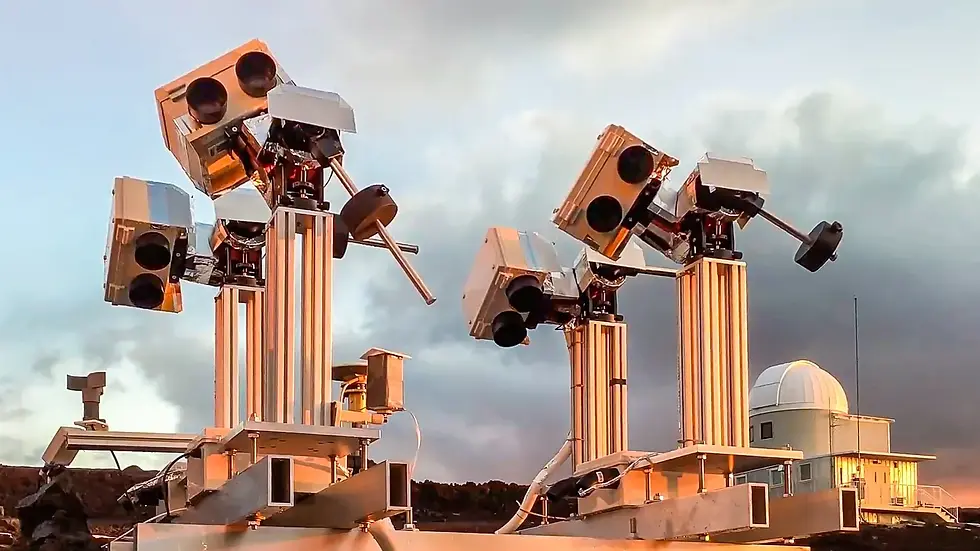
Next-generation smart telescopes, improved AI analysis, and globally distributed robotic networks are expected to accelerate the discovery of smaller and more temperate worlds, including potentially habitable exoplanets. Better automation will also make it easier to coordinate rapid follow-up when promising signals appear.
Collaboration with space missions and citizen science programs is likely to broaden participation and expand the volume of high-quality observations, strengthening the pipeline from initial detection to confirmation and detailed characterization.


Comments