Smart Telescopes Are Revolutionizing Amateur Astronomy
- DEREK MCDERMOTT
- Feb 28
- 2 min read

Advanced smart telescopes are making it easier than ever for amateur astronomers to explore the night sky with precision, automation, and app-based guidance.
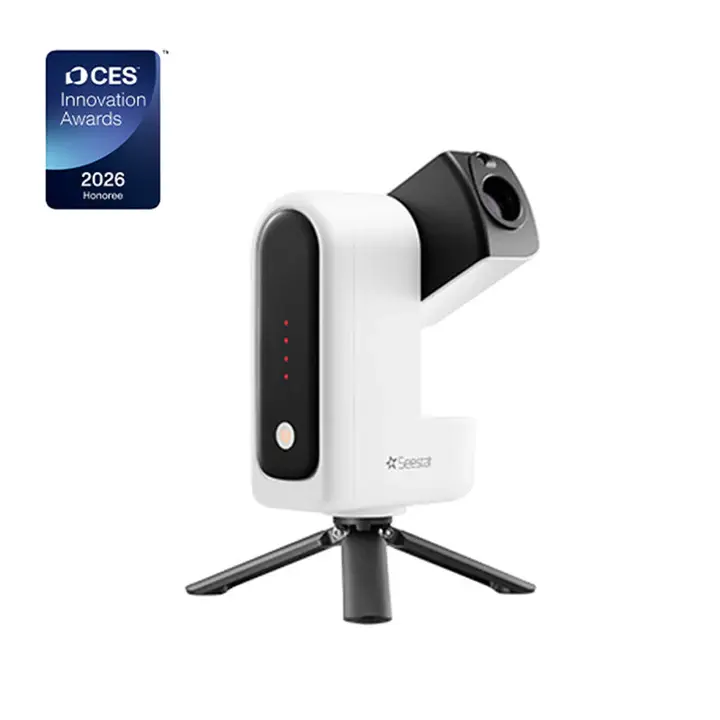
A modern smart telescope Seestar S30 Pro
How Smart Telescopes Work
Smart telescopes combine traditional optics with modern computing, sensors, and connectivity to guide users to celestial objects automatically. Many models pair with smartphones or tablets, offering interactive sky maps, object databases, and automated tracking of stars, planets, and deep-sky objects.
These devices can automatically align themselves with the night sky using GPS and built-in accelerometers, making the often time-consuming process of telescope setup and calibration almost effortless for beginners.
Benefits for Amateur Astronomers
Ease of use: Users can locate objects with just a few taps.
Automation: The telescope can track planets, stars, and satellites automatically.
Education: Many apps provide information on celestial objects as they are viewed.
Accessibility: Allows beginners to explore astronomy without extensive prior knowledge or manual adjustment skills.
Smart telescopes open up advanced observation to people who might otherwise be intimidated by traditional telescopes. They bridge the gap between casual stargazing and professional-level astronomy.
Popular Models and Features
Current market leaders include models from Celestron, Unistellar, and Vaonis, featuring high-definition optics, camera integration for astrophotography, and advanced tracking algorithms. Some models even offer augmented reality overlays on a smartphone screen, letting users identify constellations, planets, and satellites in real time.
Why This Technology Matters
As smart telescopes become more widespread, they are democratizing access to astronomy, inspiring educational programs, and enabling hobbyists to participate in citizen science projects such as asteroid tracking and variable star monitoring.
Experts suggest that the combination of automation, AI, and connectivity in smart telescopes could lead to a new generation of amateur astronomers making meaningful contributions to science.
Looking Ahead
The next wave of smart telescopes is expected to include even greater automation, higher-resolution imaging, and integration with AI-assisted discovery tools. These advances promise to make the night sky more accessible and engaging than ever, whether for casual stargazers or serious enthusiasts.



Comments