William Herschel: From Musician to Pioneer of the Heavens
- DEREK MCDERMOTT
- Apr 8
- 3 min read

Updated: May 31
Standfirst: William Herschel transformed the night sky forever. From humble beginnings as a musician to discovering a new planet and mapping the stars, his curiosity and ingenuity shaped modern astronomy.

Early Life and Unlikely Beginnings
Born in Hanover, Germany, in 1738, William Herschel began life far from the world of science. Music dominated his early years; he trained as a musician and eventually moved to England, where he became a professional organist. Yet, Herschel’s fascination with the heavens was relentless. Teaching himself mathematics, optics, and telescope construction, he gradually shifted his focus from music to the mysteries of the cosmos.
Crafting Tools to Explore the Sky
Herschel quickly realized that observing the heavens required instruments superior to what was commercially available. Using his craftsmanship, he built powerful telescopes from scratch. Grinding and polishing mirrors himself, he developed instruments that surpassed anything used in England at the time. This technical mastery gave Herschel an edge: the ability to see celestial objects in detail no one else could.

The Discovery of Uranus
In 1781, Herschel made his most famous discovery: Uranus. While surveying the night sky, he noticed an object that moved differently from the stars. This was the first planet discovered with a telescope in modern history, and it doubled the known size of the solar system. The discovery earned him international acclaim, royal recognition, and funding to continue his astronomical work, cementing his place as one of history’s great observational astronomers.

Mapping the Stars and Nebulae
Beyond Uranus, Herschel dedicated his life to cataloging the heavens. He meticulously recorded stars, star clusters, and nebulae, producing detailed maps of the Milky Way. His observations suggested that many nebulae were not clouds but distant galaxies, laying the groundwork for our modern understanding of the universe. Herschel’s work inspired generations of astronomers to look deeper and further into the cosmos.

The Discovery of Infrared Radiation
Herschel’s curiosity extended beyond visible light. Through experiments with prisms and sunlight, he discovered infrared radiation—light beyond the red end of the spectrum. This groundbreaking finding expanded physics as well as astronomy, opening new ways to study the universe beyond what the eye can see. Infrared observation remains a critical tool in modern astronomy, from planetary science to cosmology.

Caroline Herschel: A Partnership of Minds
No account of William Herschel is complete without his sister, Caroline Herschel. An accomplished astronomer herself, she assisted William in observations and independently discovered several comets. Their collaboration stands as one of the most remarkable scientific partnerships in history, blending meticulous observation with relentless curiosity.

Later Life and Lasting Legacy
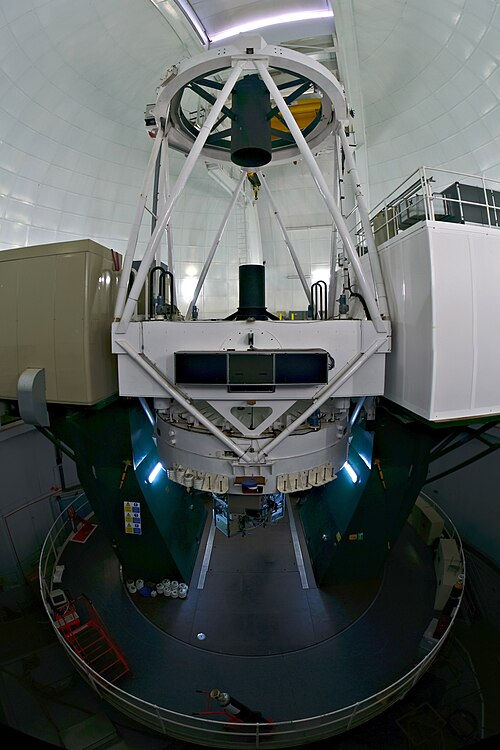
Herschel continued his observations well into his later years, receiving numerous honors for his contributions to science. His techniques in telescope design, star mapping, and planetary discovery influenced future generations. Today, the Herschel Space Observatory and other astronomical tools carry his name, a testament to his enduring impact.
Why William Herschel Still Matters
Herschel’s story is more than historical—it’s inspirational. He exemplifies how curiosity, persistence, and ingenuity can redefine what humanity knows about the universe. From discovering new worlds to revealing invisible light, his work continues to shape modern astronomy, reminding us that the night sky always has more to reveal.
Conclusion
From a German musician to one of the most celebrated astronomers of all time, William Herschel’s life demonstrates the power of curiosity and dedication. His discoveries expanded our understanding of the cosmos and set the stage for centuries of exploration, proving that one person’s passion can illuminate the universe.


Comments